Sunderland Maritime Heritage
Home News Ships Shipyards About Shop
Activities Donations Membership Acknowledgements Links
         

City of Adelaide

Cretehawser SD14 Torrens Liberty Ships


H M S Venerable
history & slide show of construction

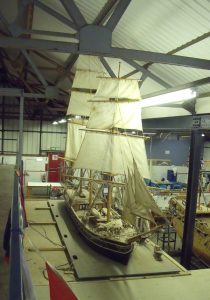
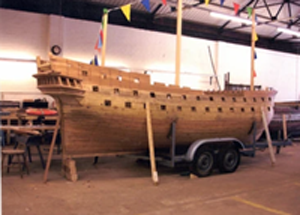
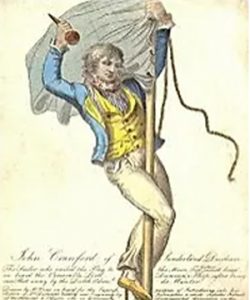
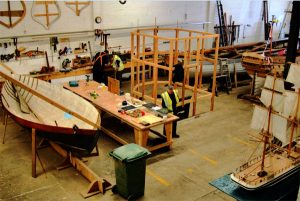
2005 is the Year of the Sea. After a discussion at Sunderland Maritime Heritage (SMH), it was decided to take up the Secretary's suggestion and build a replica of HMS Venerable, a 74-gun third-rate ship of the line which had been Admiral Duncan's flagship at the Battle of Camperdown. HMS Venerable was chosen because of the Sunderland connection. This was the ship in which Jack Crawford, famous in Sunderland fokelore performed his heroic action of re-nailing to the mast, the shot-away flag of Admiral Duncan, Commander of the British Fleet.The ship continued in naval service until she was wrecked in 1804.
Pat Bell

Camperdown

11 October 1797


The Battle of Camperdown, 11 October 1797 by Thomas Whitcombe, painted 1798,
showing the British flagship Venerable engaged with the Dutch flagship Vrijheid.

The Battle of Camperdown was a naval battle of the French Revolutionary Wars, fought on 11 October 1797 between a Dutch fleet under Admiral de Winter and a British fleet under Admiral Adam Duncan.
Throughout 1797 Duncan had been blockading the Dutch fleet in Den Helder and Texel. The Dutch fleet was intending to cover a landing of French troops in Ireland to support a rebellion, so when Duncan took his squadron to Yarmouth to refit, the Dutch took the opportunity to come out into the North Sea. The British, alerted by the cutter Black Joke, gave chase.
The two fleets met 18 miles from the Dutch coast, the British with 24 ships and the Dutch with 25. The British attacked in a two-column assault presaging the Battle of Trafalgar eight years later, with Vice Admiral Onslow leading one division in Monarch, and Duncan leading the other in Venerable. Venerable broke through the Dutch line and engaged de Winter's flagship, Vrijheid, from the lee side.
The British captured eleven ships including Jupiter and Vrijheid (both of 74 guns), but were too damaged to pursue the remainder. British casualties were 220 killed and 812 w
ounded; Dutch casualties were 540 killed and 620 wounded.
As a result of the battle the French expedition to Ireland was postponed to August 1798, when it was cancelled due to bad weather.

www.answers.com

The slideshow beneath was designed and constructed for us voluntarily by Naga Toram and Raja Majjiga
you can contact them at:
naga.toram@sunderland.ac.uk